Heritage Montessori School – Case Study
Mission & Identity
Heritage Montessori carries one of the most distinguished legacies in American Montessori education. As the first Montessori school in Orange County and among the first in the United States, Heritage was founded by educators with a direct, personal connection to Dr. Maria Montessori herself, making the school’s name not a marketing choice but a statement of fact.
Their mission is straightforward and deeply held: to continue Dr. Montessori’s work. This means developing independent problem solvers, nurturing curious and compassionate learners, and preparing children to become caring, responsible citizens of the world. Across their multiple Southern California campuses, every classroom, curriculum decision, and teacher interaction is guided by that founding commitment.

Montessori Programs & Educational Philosophy
Heritage Montessori serves children from ages 2 through 10, offering programs that span Early Childhood through Lower Elementary. Their curriculum draws directly from Dr. Montessori’s original handwritten notes, a living connection to the source that few schools in the country can claim.
The Primary Program (Ages 2–6) centers on five core areas: Practical Life, Sensorial, Language Arts, Mathematics, and the exploration of Physical, Cultural & Natural Worlds. Children work within carefully prepared environments where sequential, hands-on materials allow each child to progress at their own pace and level.
The Elementary Program expands the child’s world through Cosmic Education, an integrated approach that shows students how subjects connect to one another and to the larger story of human civilization. Critical thinking, collaborative skills, and intrinsic motivation are developed alongside traditional academic competencies.
What distinguishes Heritage’s approach beyond materials and curriculum is the depth of teacher training. Their educators are not simply trained in Montessori methods; they are trained in the psychology of the Montessori classroom, including classroom management, child observation, and individualized curriculum development. This psychological foundation is what enables Heritage to serve the full range of learners effectively.
Mixed-age classrooms (typically spanning three years) allow younger children to learn naturally from older peers, while older students reinforce and deepen their own understanding by sharing knowledge, a model that builds both academic confidence and genuine community.

Digital Presence: Reflecting a Legacy in Design & UX
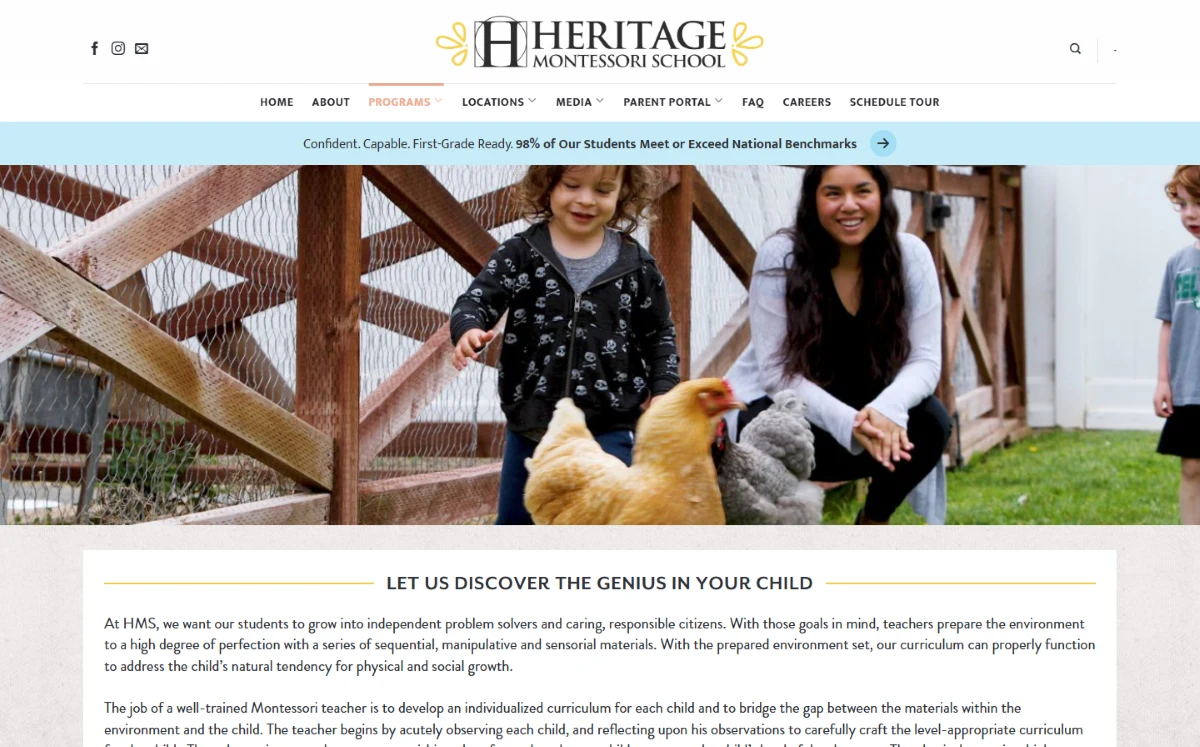
For Heritage Montessori, the digital challenge was significant: how do you translate a 60-year legacy rooted in personal connection and philosophical depth into a website experience that is both accessible to new families and true to that heritage?
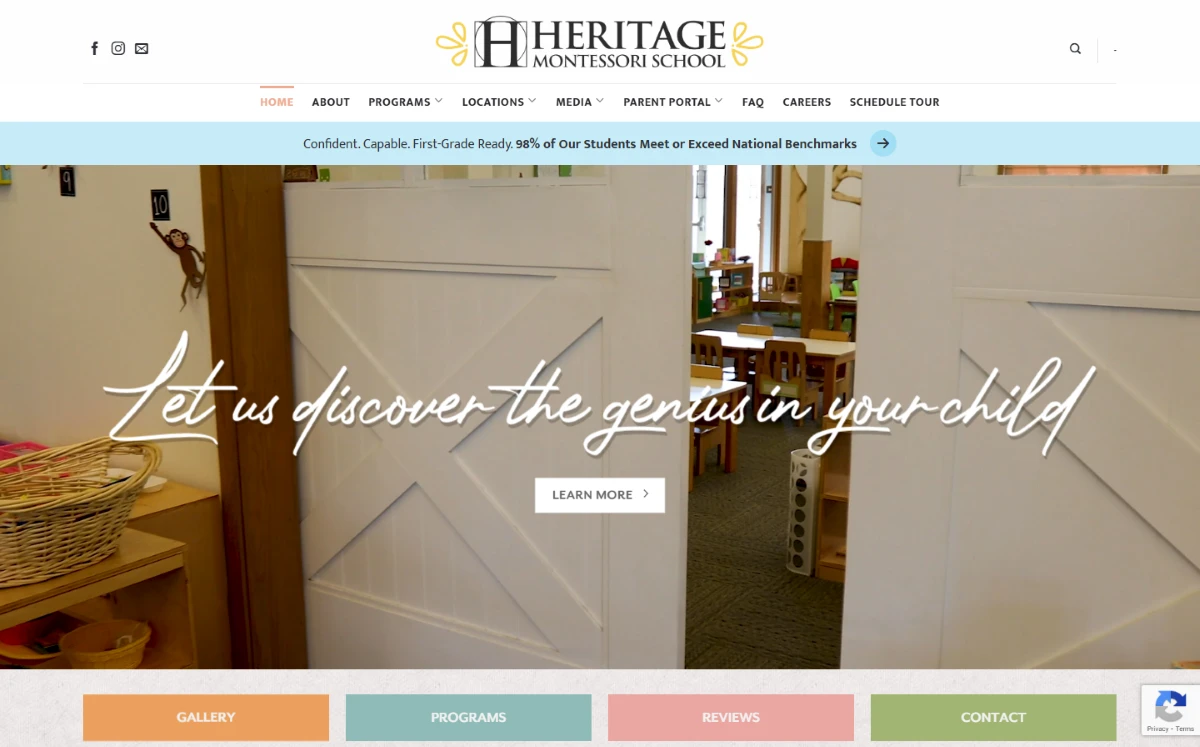
Our approach was to let history lead. The website is designed to surface Heritage’s unique story immediately, the founding family’s direct relationship with Dr. Montessori, the curriculum drawn from her original notes, and the multi-generational thread of authentic Montessori practice that runs through every campus.
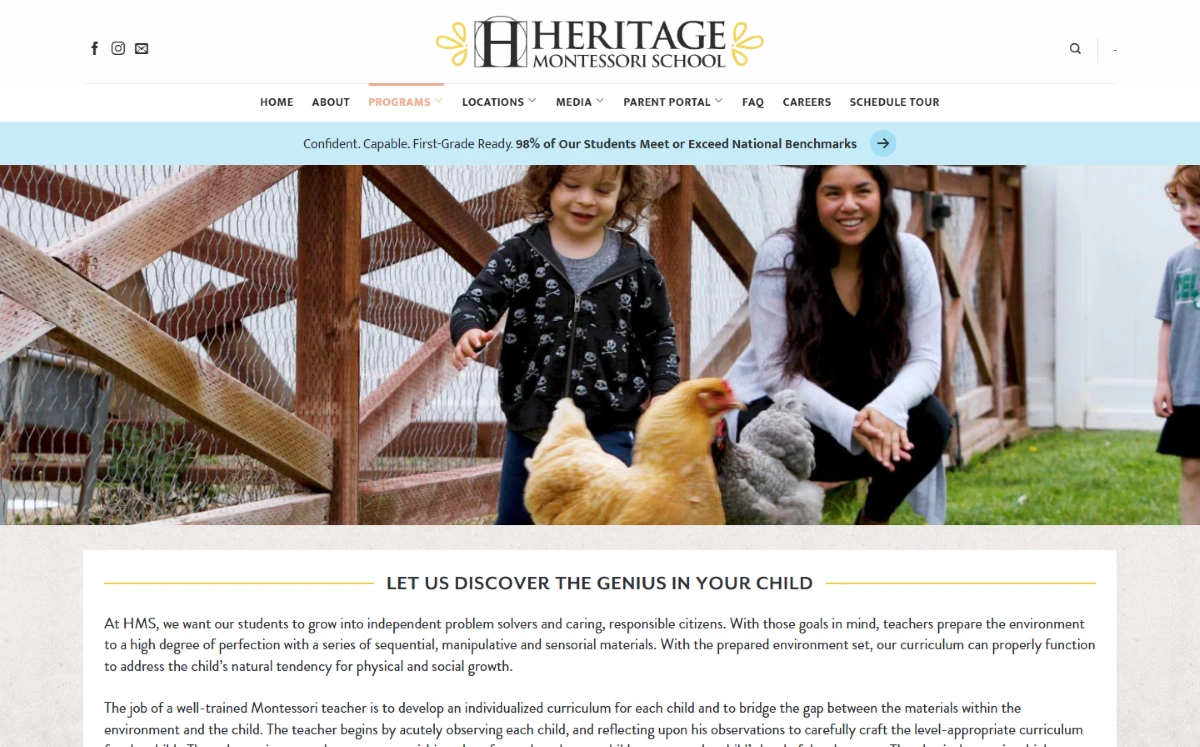
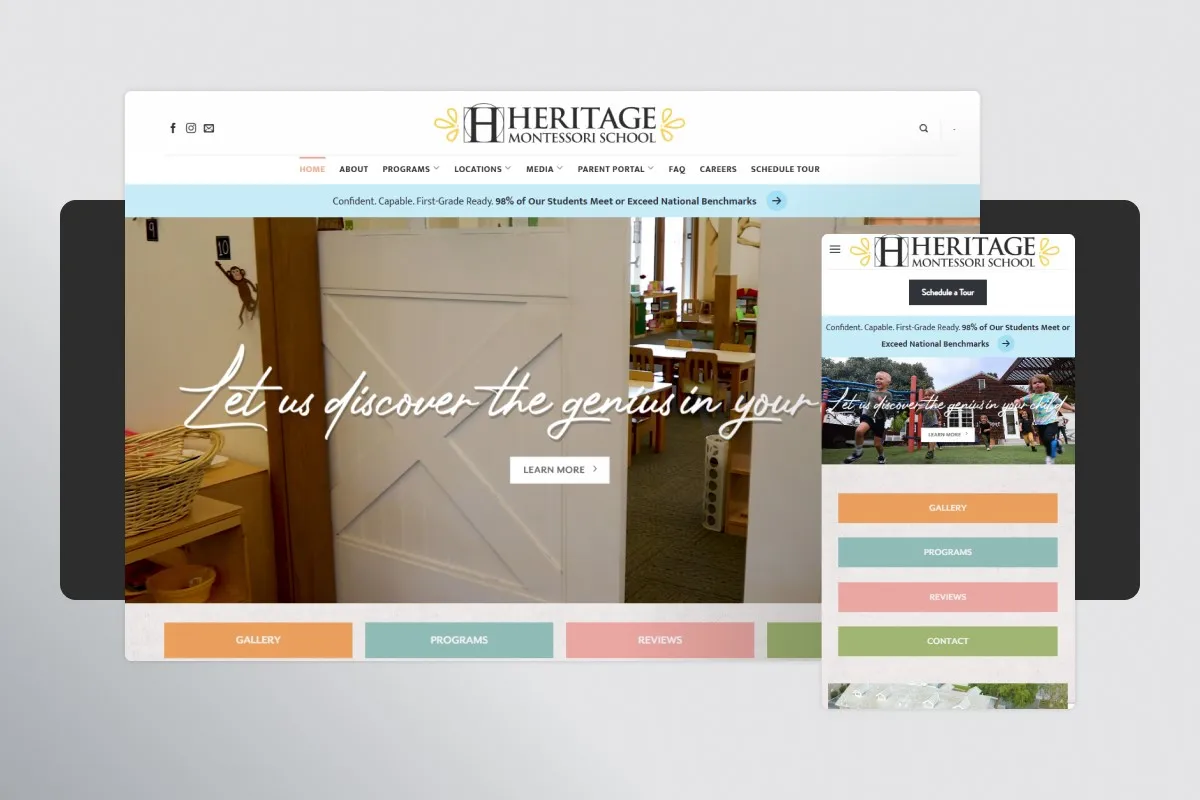
Design choices reinforce the school’s identity: warm, natural tones that echo the Montessori prepared environment; clean, uncluttered layouts that reflect order and intentionality; and imagery that centers children engaged in purposeful, hands-on work. Navigation is structured to guide two distinct audiences simultaneously: families exploring Montessori for the first time, and parents already committed to Montessori who need to evaluate the specific depth and authenticity of Heritage’s approach.
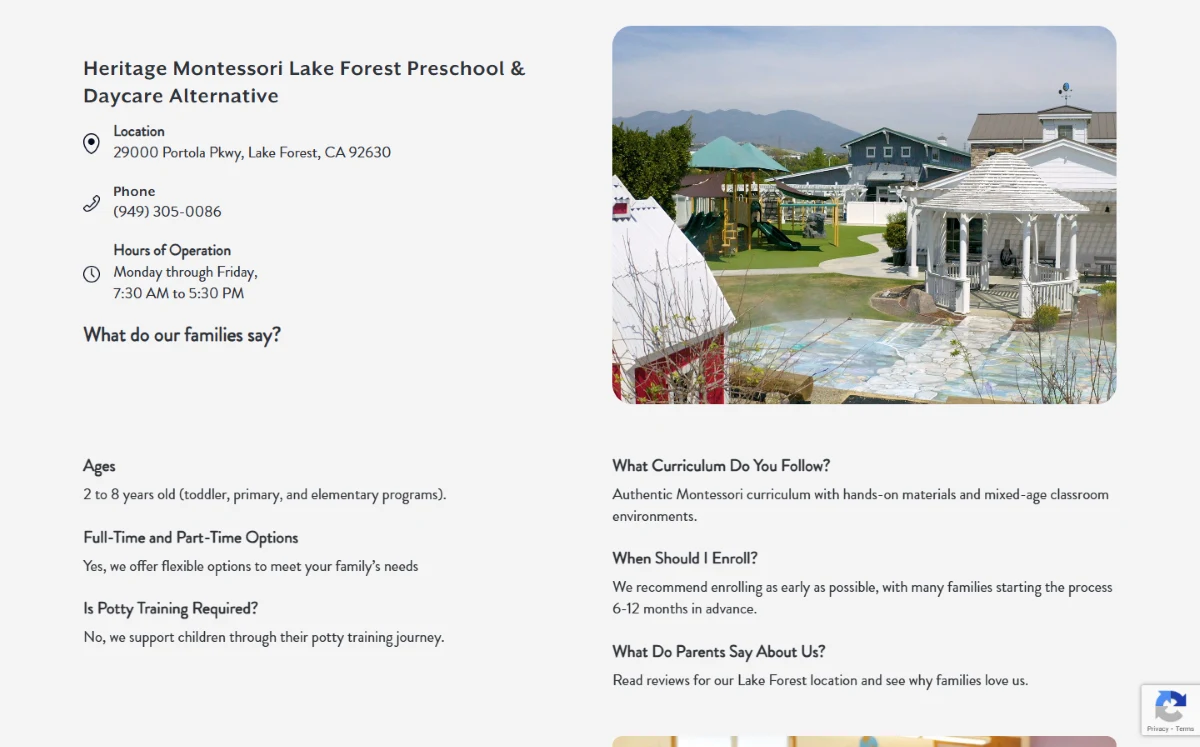
Program pages are built around the questions families actually ask: What will my child learn? How does the classroom work? What makes this school different from others that also call themselves Montessori? Each answer is grounded in Heritage’s real differentiators: lineage, training depth, and curriculum sourced from original Montessori materials.
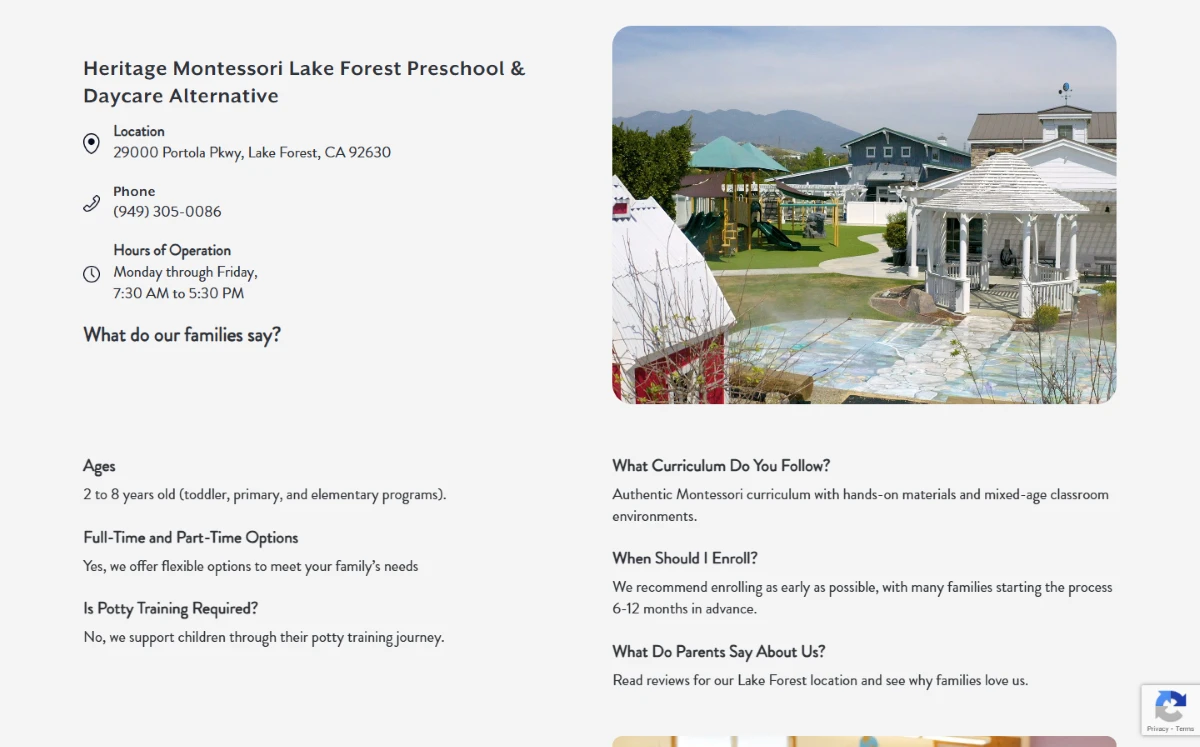
Multi-campus functionality is handled through a clean location architecture that allows each campus to communicate its own community and character while remaining unmistakably part of the same Heritage family. Enrollment calls to action, schedule a tour, download a program guide, and connect with admissions are placed contextually throughout the experience rather than forced into a single page.

Outcome
The final digital experience positions Heritage Montessori for what it is: the original. A school with roots in Montessori history that no competitor can replicate, now presented with the clarity and confidence that legacy deserves. Families arriving at the site leave understanding not just what Heritage does, but why Heritage alone can do it, and with the tools and trust to take the next step toward enrollment.